With the market competition becoming tougher, businesses and individuals are paying extra attention to efficiency and sustainable growth. In the development of skills, initiative, and potential, A&TA guarantees that businesses to reach their optimal and the staff get their positive effects in their development. However, what is A&TA, and how does it enhance individual growth and corporate results?
This blog post explores A&TA and how it maximises technological resources and supports informed decision-making for both personal and business success. We’ll examine tactics that highlight A&TA’s advantages and demonstrate their effectiveness with real-world examples. By the end, you will know more about A&TA and how it may support more sustainable and productive corporate growth.
What is A&TA?
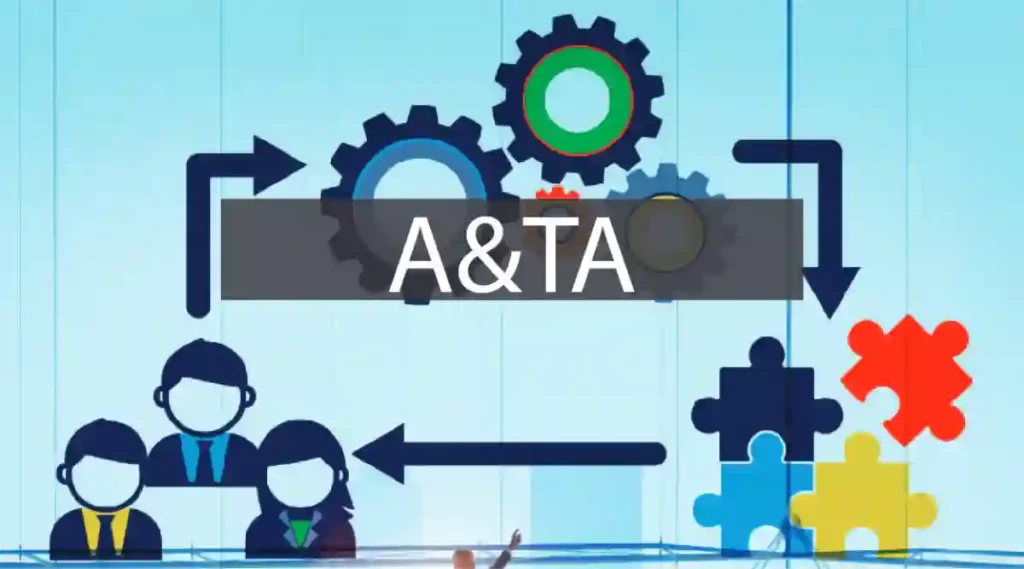
A & TA stands for Automation and Technology Adoption. It includes the methods and techniques used by businesses to incorporate automated solutions into their regular operations.
This strategy seeks to increase production overall, decrease manual labor, and improve efficiency. Implementing technology is only one aspect of A&TA; another is cultivating an innovative culture.
Businesses may empower their teams and expedite workflows by emphasizing both automation tools and employee involvement. A&TA symbolizes a change to a more flexible workplace where human knowledge and technology coexist.
Benefits of Awareness and Transformative Action
A&TA helps people, organizations, and communities make positive changes in several ways. Here are a few major benefits:
1. Deeper Understanding
By exposing concealed thinking, this approach helps people gain a thorough understanding of complicated situations. Thus, they make improved and precise choices.
2. Sustainability
A&TA focuses heavily on long-term transformation, which means that the efforts cannot be brief and must lead to a change. Also, it doesn’t choose quick fixes that can miss the main reason behind a concern.
3. Empowerment
It enables people to manage their development by giving them self-confidence and the strength to go against barriers.
4. Systemic Impact
A&TA brings about revolutionary improvements by altering entire systems as opposed to only treating their symptoms. Additionally, it can change laws or cultural norms and lead to revolutionary outcomes in the area of social justice.
5. Cooperation
The strategy facilitates group work and collaboration as human beings are brought together to address the issues. It also creates confidence and intercultural knowledge.
6. Flexibility
Continuous cycles of learning and development are important to A&TA. Because of this, it is still applicable even when issues change.
How to Get Started with A&TA?
- Starting with A&TA isn’t as difficult as you might think. Evaluate your present procedures first. Find out where technology and automation can make work processes more efficient.
- Next, look at the TA tools that are accessible to meet your company’s demands. Seek software with user-friendly interfaces and scalability. Use the trial versions offered by several platforms to assess how well they work.
- When you have chosen the tool, make sure your team schedules training hours. Adoption goes more smoothly when everyone is familiar with the system. During this stage, promote candid discussion about difficulties and discoveries.
- Ensure you monitor performance once the implementation has taken effect. Set down well-defined measures to quantify improvement and identify course correction.
- Frequent user input will aid in future process improvement. As technology advances and your company expands, continue to be proactive in implementing enhancements.
The Four Pillars of the A&TA Framework
Four interconnected pillars support A&TA and guarantee both comprehensive diagnosis and useful results:
Awareness
The conduct of stakeholder interviews, data analysis and surveys to identify performance gaps.
Evaluation
Using such methods as process mining, Fishbone diagram, and the Five Whys to conduct a root-cause analysis.
Transformative Action
Using agile project-management techniques to plan and carry out change sprints.
Sustainability & Feedback
KPI tracking, continuous development loop integration, and solution refinement.
Evolution of A&TA from 2020 to 2025
An increase in the A&TA development during 2020-2025 period indicated the remarkable changes in business environment. Standardization and predictability were formerly ranked relatively higher among the priorities of the business companies. Four trends such as seamless communication, lower transaction costs, unmatched automation, and changing demographics affected this strategy.
To address these additional issues, the framework has been modified. A&TA principles helped forward-thinking organizations thrive in unpredictable times. This progress was accelerated by the COVID-19 pandemic. Experts referred to it as an “unfreezing chance” for companies to identify areas for development and create more adaptable, interconnected, and meaningful systems.
Three essential characteristics were displayed by companies that effectively applied the A&TA framework:
- Clearly defined identity and purpose (being aware of their identity)
- Easy and quick processes are the main feature of outline plans.
- Development via improved learning capacities and innovations
The development proves to be indicative of the migration towards more data-driven, more manageable forms of companies that are more responsive to changes in the market, but with a 100-year mindset.
How to Implement A&TA in Business and Real Life?
You need to do the following exercises to install A&TA successfully.
Awareness:
First, individuals or groups become conscious of a specific problem, necessity, or opportunity. Following that, they compile data, provide context, and provide a baseline for advancement. For instance, an individual may recognize the significance of mental health, or a business may uncover an underlying customer demand.
Evaluation and Introspection
A thorough examination of this process issue is carried out after the problem has been comprehended. To ascertain the underlying causes and likely results entails investigation, historical event analysis, and expert consultation. Making decisions is made easier with a clear understanding.
Planning and Strategy Development
After identification of the problem, a separation stage involves coming up with a workable plan of action. At this level, you state what you would like to accomplish, go over the resources you possess and get answers that you can take into action immediately.
Action
During this phase, strategies are applied. By altering corporate policy or individual behavior, this activity turns plans into actual progress.
Evaluation and Adaptation
After you’ve completed your updates, check the results. Comparing the results, checking the progress and making sure that the course is corrected also assists a person and a business during the learning process.
Sustainability
The final stage is sustainability, which ensures continuity. Integration of strategic approaches into routine operations has been integrated into the process, thereby transforming the process into a loop to be improved on in the future.
Common Misconceptions about A&TA
- Misconceptions regarding A&TA are common and might obscure its actual potential. It’s a prevalent misconception that A& is exclusively for big businesses. In actuality, putting these tactics into practice may help companies of all sizes.
- Another misconception is that A&TA demands a large upfront investment. Even though there can be some upfront expenses, they are frequently far outweighed by long-term savings and efficiency improvements.
- Some think it only affects a few industries. However, ideas are flexible and applicable to a range of sectors, such as retail and healthcare.
- Some people believe that implementing A&TA will result in a loss of process control. Rather, it empowers businesses through a better understanding and becoming smarter in data and decision making. Knowing about these myths, businesses can make a well-informed decision about incorporating TA successfully into their operations.
Sales Optimization Using A&TA
A&TA assists companies in monitoring more intricate performance indicators in addition to basic measures like call volume. For example, AT&T looks at the overall health of the sales funnel by tracking lead quality, conversions, the amount of sales and customer lifetime value. Conversion rates, call centre capacity analysis, and revenue measures, such as advertising ROI and sales closure rates, are all monitored by their measuring system.
By integrating identity resolution with their call tracking systems, AT&T was able to accomplish the following outcomes:
- 85% more calls were answered.
- Conversion rates more than doubled.
- Increases in highly qualified callers that are statistically significant
According to research, ads that optimize with A&TA signals get 20–30% greater conversion rates and 20–30% cheaper cost per conversion than those that do not. Instead of depending on conjecture or incomplete facts, sales teams may now determine what drives conversions.
Future Trends and Developments in A&TA
The future thinking and behavior of human beings will be highly affected by new technology and social changes. Broader application of data analytics and artificial intelligence will increase self and decision-making, and the changes within organizations and individuals will be more effective.
The tools of data collection and hybrid work models are changing our communities and enabling more people and teams of people to be able to take transformative action with more flexibility or inclusivity than ever before.
Moreover, the increasing focus on social responsibility and sustainability can promote such behavior in people and organizations, the behaviors that are aimed at combining the values of A&TA. As a result, this change promotes moral behavior and helps society in the long run.
Conclusion:
A&TA provides a novel viewpoint on how companies might improve their operations. By incorporating A&TA into your plan, you may increase production and efficiency. It is clear what the benefits are: better decisions, faster work and an overall improvement in competitive output.
Numerous prosperous businesses have already adopted it and experienced significant benefits. Their experiences demonstrate that this strategy is changing how businesses operate daily and is not merely a fad.
If you’re seeking ways to stay competitive in the fast-paced industry of today, thinking about it can be one of the greatest courses of action. Adopt innovation and see how improved analytics and strategic applications help your company grow.
FAQs
Q1: What is Awareness and Transformative Action?
Awareness and Transformative Action (A&TA) is a strategic approach that combines self-awareness and substantial change. Consequently, individuals and organizations are able to identify structural issues and put in place measures to effect permanent changes.
Q2: Can A&TA be integrated into educational settings?
Full-funnel KPIs are monitored by AT&T, including things like lead quality, results in conversions, revenue and how long a customer stays with the company. Students thus gain the abilities needed to be active citizens who are able to identify and resolve systemic social injustices in their communities.
Q3: What makes A&TA different from traditional change management?
A&TA prioritizes continuous-improvement loops and quick agile sprints over extensive waterfall projects.
Q4: Can A&TA be applied to any industry?
Indeed, case studies show adaptability across industries like manufacturing, SaaS, and healthcare.
Q5: How does A&TA differ from traditional change management?
A&TA places a higher priority on awareness and intentional change than traditional change management, which depends on formal procedures and outside action. Consequently, operating by its tenets promotes more significant organizational and personal development.
 Punit
Punit